Home Water Delivery vs. Store-Bought Bottles: Cost, Convenience & Environmental Impact
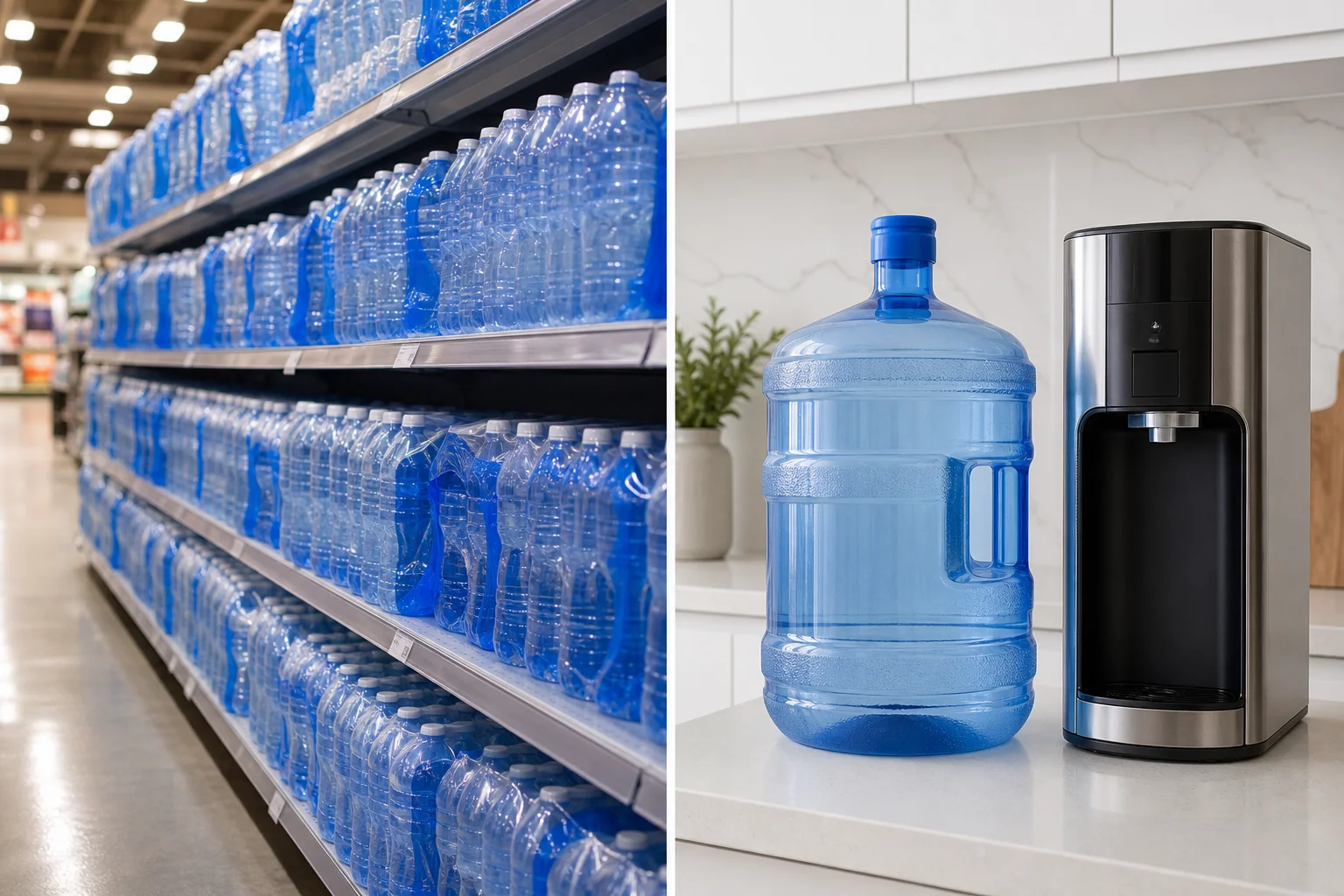
If your household goes through bottled water regularly, you've probably stood in a grocery store aisle loading cases of plastic bottles into your cart and thought: there has to be a better way. You're not alone. Across Ontario, more families are ditching store-bought water bottles in favour of home water delivery — and the reasons go far beyond convenience.
In this guide, we break down exactly how home water delivery compares to buying bottled water at the store across the three factors that matter most: what it costs, how convenient it is, and how it affects the environment. Whether you're in Haldimand County, the Niagara Region, or Norfolk County, these numbers apply to you.
The Real Cost: Water Delivery vs. Store-Bought Bottles
Let's start with what hits your wallet. The cost difference between buying individual bottles at the store and having reusable jugs delivered to your door is more significant than most people realize.
What Store-Bought Water Actually Costs
A typical Canadian family of four drinks about 8 to 10 litres of water per day. If you're buying 500ml bottles from the grocery store, here's what that looks like over a year:
- Average cost per 500ml bottle: $0.25–$0.55 (store brand) to $1.50+ (premium brands)
- Weekly consumption: ~3 cases of 24 bottles ($12–$30 per week)
- Annual cost: $600–$1,500+ depending on brand
- Plus: Gas to the store, time spent shopping, trunk space taken up
Research from consumer studies shows that the average Canadian family spends between $500 and $700 per year on store-bought bottled water — and that's with budget brands. Families who prefer premium spring water or alkaline options can easily spend over $1,000 annually.
What Home Water Delivery Costs
With a delivery service like Kool Springs, you're paying per 18-litre (5-gallon) or 11-litre jug. Because these bottles are reusable — returned, professionally sanitized, and refilled — you're only paying for the water itself, not new packaging every time.
- Cost per 18L jug: Significantly less per litre than store-bought bottles
- No deposit surprises: Bottles are included in the service
- No fuel costs: Water comes to you on a regular schedule
- No impulse spending: One less reason to be at the store
The Hidden Costs of Store-Bought Water
Beyond the sticker price, store-bought water carries hidden costs that add up: fuel for weekly trips, vehicle wear, time spent loading and unloading heavy cases, and the physical toll of carrying 40+ pounds of water from your car to your kitchen. These indirect costs make home delivery even more economical when factored in.
Consumer Reports — The True Cost of Bottled Water, 2024
Cost Comparison at a Glance
| Factor | Store-Bought Bottles | Home Water Delivery |
|---|---|---|
| Cost per litre | $0.50–$3.00+ | Significantly lower |
| Annual family cost | $600–$1,500+ | Lower overall cost |
| Fuel & transport | Weekly store trips | Included in delivery |
| Packaging cost | New plastic every purchase | Reusable — no extra cost |
| Hidden costs | Time, gas, physical effort | None — delivered to your door |
Convenience: Why Lugging Cases From the Store Is Outdated
Here's a scenario most families know too well: it's Sunday afternoon, you realize you're down to your last few bottles, and now someone has to drive to the store, find parking, load a cart with heavy cases of water, wait in the checkout line, carry them to the car, drive home, and haul them inside. That's 45 minutes to an hour — every single week.
A case of 24 water bottles weighs about 13 kilograms (29 pounds). If you're buying three cases a week, you're carrying nearly 40 kilograms of water from your car to your kitchen — every week. Over a year, that's over 2,000 kilograms of water you're manually transporting.

How Water Delivery Changes the Equation
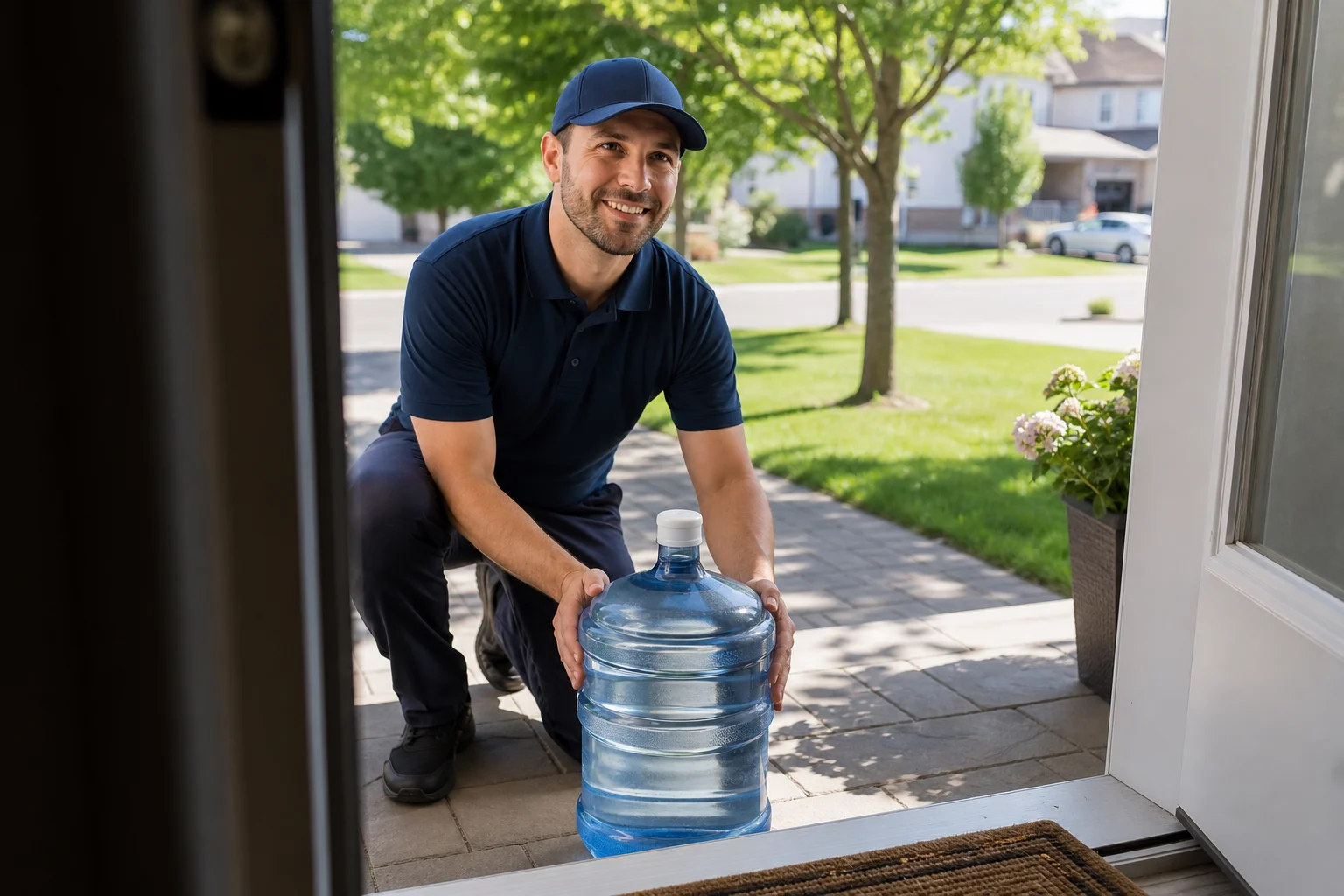
With home water delivery, fresh water shows up at your door on a regular schedule — whether that's weekly, bi-weekly, or monthly. No trips to the store, no heavy lifting, no running out on a holiday weekend.
- Scheduled delivery: Set it and forget it — water arrives when you need it
- Doorstep service: Your delivery driver brings jugs right to your door (some providers, like Kool Springs, will even carry them inside)
- Empty bottle pickup: Return your empties at the same time — no clutter, no recycling hassles
- Never run out: Consistent supply means no last-minute store runs
- Flexible scheduling: Need extra before a party or holiday? Just adjust your order
As one of our customers put it in a recent review: "So much easier than lugging your own water around." When your water comes to you, you get back time every week — time better spent with family, on the job, or simply relaxing.
Environmental Impact: Reusable Jugs vs. Single-Use Plastic
This is where the difference between delivery and store-bought becomes impossible to ignore. The environmental cost of single-use plastic water bottles is staggering — and the numbers don't lie.
The Single-Use Plastic Problem in Canada
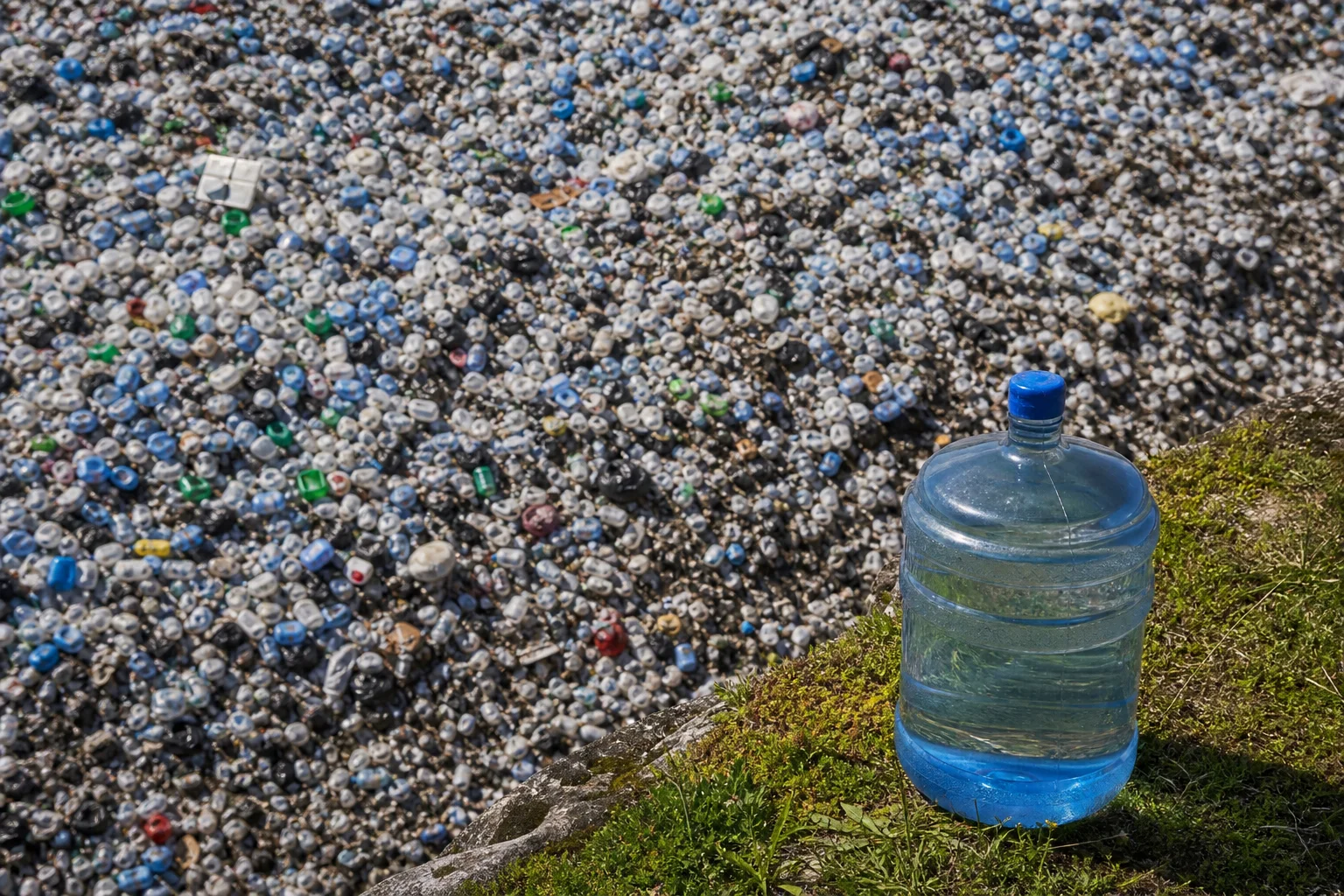
Canada's relationship with single-use plastic is troubling. According to the Plastic Action Centre's 2024 Progress Report, the overall recycling rate for plastic packaging in Canada sits at just 16%. Even beverage bottles specifically — which have the best recycling infrastructure — only achieve a 48% recovery rate nationally.
That means more than half of all plastic water bottles purchased in Canada never get recycled. They end up in landfills, waterways, or as litter in our communities.
Canada's Plastic Recycling Reality
The overall recycling rate for plastic packaging in Canada is just 16%. Deposit return systems achieve 60% recovery, residential programs recover 16%, and the industrial, commercial, and institutional sector manages only 11%. The gap between what consumers believe is being recycled and what actually gets processed remains significant.
Plastic Action Centre — Canada-wide Plastic Packaging Flows: A 2024 Progress Report
How One Reusable Jug Makes a Massive Difference
A single 18-litre reusable water jug replaces approximately 36 standard 500ml plastic bottles. Here's what that adds up to for a typical family:
- Per delivery: 2 jugs = 72 plastic bottles eliminated
- Per month: ~288 plastic bottles saved
- Per year: ~3,744 plastic bottles kept out of landfills
And these reusable jugs aren't a one-time-use improvement — each jug is professionally sanitized and refilled dozens of times before being recycled at end of life. The carbon footprint of manufacturing, filling, and delivering one 18L jug is a fraction of producing, shipping, and disposing of the 36 single-use bottles it replaces.
Carbon Footprint Comparison
Research from MIT's Office of Sustainability found that each single-use PET plastic bottle contributes approximately 69 grams of CO₂ equivalents to the atmosphere — from raw material extraction through manufacturing. About 60% of those emissions come from synthesising the PET resin, and 30% from the energy-intensive blow-moulding process.
Multiply that by the 3,744 bottles a family uses per year, and you're looking at approximately 258 kilograms of CO₂ just from the bottles themselves — not counting transportation to stores and eventual waste processing. Switching to reusable delivery jugs eliminates the vast majority of this footprint.
Water Quality: Is Delivered Water Better?
Quality is the factor most people don't think about — but it's arguably the most important. Not all bottled water is created equal, and how water is stored matters just as much as how it's filtered.
The Problem With Store Shelf Storage
Store-bought water bottles can sit on shelves, in warehouses, or on transport trucks for weeks or months before you buy them. During that time, especially in warm conditions, chemicals from the plastic packaging can leach into the water. Studies have shown that PET bottles stored at elevated temperatures release microplastics and chemical compounds at higher rates.
- Shelf time: Often weeks to months from bottling to purchase
- Storage conditions: Warehouses and delivery trucks aren't always temperature-controlled
- Plastic degradation: Extended storage increases the risk of chemical leaching
- UV exposure: Store lighting can accelerate plastic breakdown
The Delivery Advantage
Home-delivered water in reusable jugs avoids these issues entirely. The water is bottled fresh, stored in BPA-free, food-grade polycarbonate or PET jugs designed for repeated use, and delivered to your door on a short, predictable schedule. The jugs are thicker and more durable than single-use bottles, which means less chemical interaction with the water.
Reputable delivery services also follow strict quality protocols. At Kool Springs, every batch of water meets or exceeds Health Canada's Guidelines for Canadian Drinking Water Quality — the same standards that have governed safe drinking water in Canada since 1968.
The Hidden Benefits Nobody Talks About
Beyond cost, convenience, and the environment, home water delivery has some lesser-known advantages that families discover once they make the switch:
You Actually Drink More Water
When clean, great-tasting water is always accessible — cold from the dispenser or room temperature from the jug — people drink more of it. Research suggests that up to 75% of people are chronically under-hydrated. Having a water cooler at home makes hydration effortless, especially for children who might otherwise reach for juice or pop.
Emergency Preparedness
If you live in an area prone to boil water advisories — as parts of Haldimand-Norfolk are — having a reserve of bottled water at home provides real peace of mind. Regular delivery means you always have a clean water supply on hand, regardless of what's happening with municipal infrastructure.
Better Taste, Better Habits
Let's be honest — great-tasting water makes you want to drink more. Store-bought bottles from different brands taste different every time. With a consistent delivery service, you get the same water type — whether that's reverse osmosis, spring, distilled, or alkaline — with the same clean, refreshing taste every time. That consistency builds a hydration habit that sticks.
Supporting Local Business
When you buy store-bought bottled water, your money typically goes to a multinational corporation. When you choose a local delivery service, you're supporting a business in your own community — one that employs local drivers, sources water responsibly, and reinvests in the neighbourhoods it serves.
How Kool Springs Makes Home Water Delivery Simple
At Kool Springs Bottled Water, we've built our entire service around making clean, great-tasting water as effortless as possible for Ontario families and businesses.
Choose Your Water
We offer four types of water to match your preference: reverse osmosis, natural spring water, distilled water, and alkaline water. Each is rigorously tested and available in both 18L and 11L reusable bottles.
We Come to You
We deliver throughout Haldimand County, the Niagara Region, and Norfolk County — right to your doorstep. Our customers consistently tell us they love the personal, reliable service. As one recent 5-star review says: "He even carried the bottles into the basement for me and kept in touch en route to deliver."
Zero Waste, Zero Hassle
Your empty bottles are picked up on delivery day, professionally sanitized, and returned to service. No plastic waste for you to manage, no recycling bins overflowing with bottles. It's a true closed-loop system.
Ready to Make the Switch?
Getting started is easy — no long-term contracts, no complicated setup. Just great water, delivered to your door.
Ready to get started? Call 1-844-BUY-KOOL, request a free quote, or email info@koolsprings.ca.